> For the complete documentation index, see [llms.txt](https://docs.sprinthub.com/llms.txt). Markdown versions of documentation pages are available by appending `.md` to page URLs; this page is available as [Markdown](https://docs.sprinthub.com/duvidas-comuns/template-de-automacoes/webhook-integrado-template.md).

# Webhook Integrado - Template

<figure><img src="/files/QfmwQbMI4ojAsc4i5wil" alt=""><figcaption></figcaption></figure>

Utilizar templates de automação permite que as empresas respondam rapidamente às solicitações, mantenham a consistência nas respostas e otimizem os recursos. Neste artigo, vamos explorar como criar um template de automação eficaz para webhooks, abordando as etapas essenciais e as melhores práticas.

### Passos para Criar um Template de Automação para Webhooks

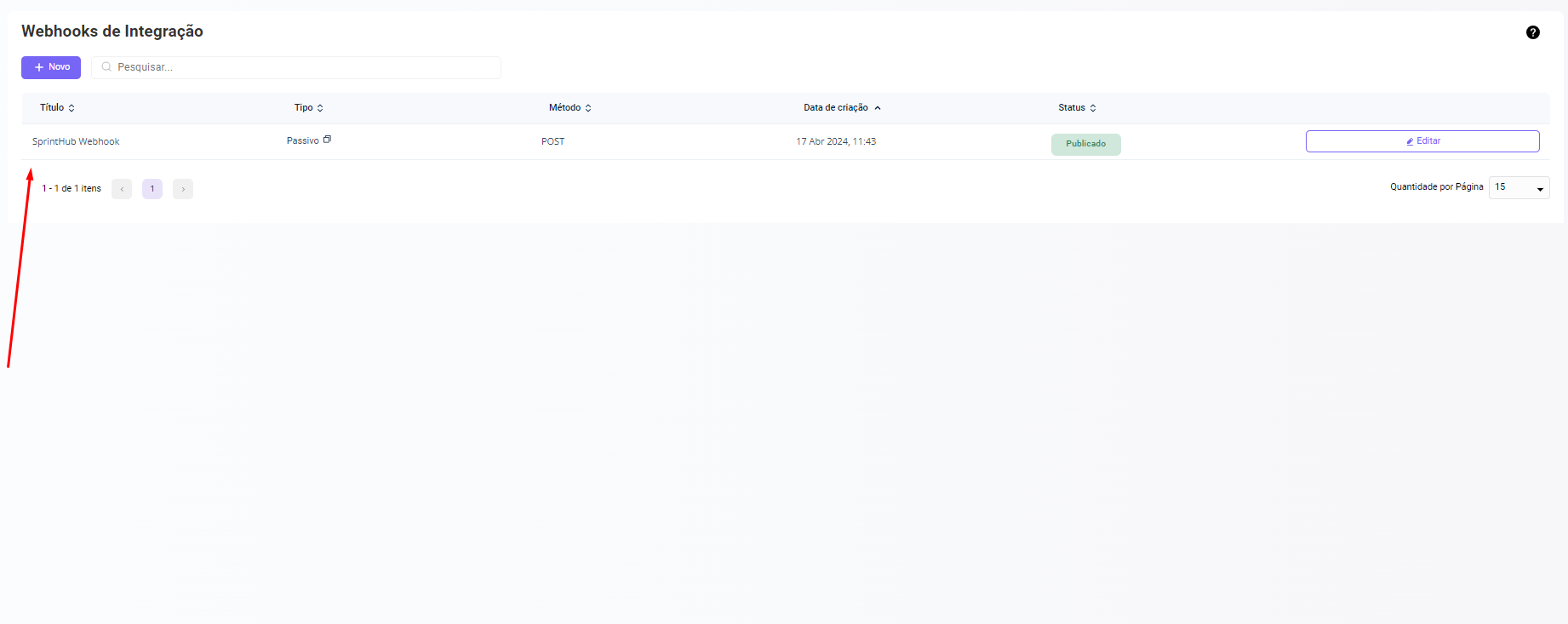
#### Com o webhook já criado, volte para a tela inicial

<figure><img src="/files/vFRpD9kz3FwrQwZoEHOJ" alt=""><figcaption></figcaption></figure>

**Clique no nome do seu webhook:**

<figure><img src="/files/TEriPdXhft59k5UxRU9N" alt=""><figcaption></figcaption></figure>

Ao lado de "Voltar" tem um botão seletor, logo abaixo "Criar template".

<figure><img src="/files/Mmu0lVj9gIpWwwFPIcWJ" alt=""><figcaption></figcaption></figure>

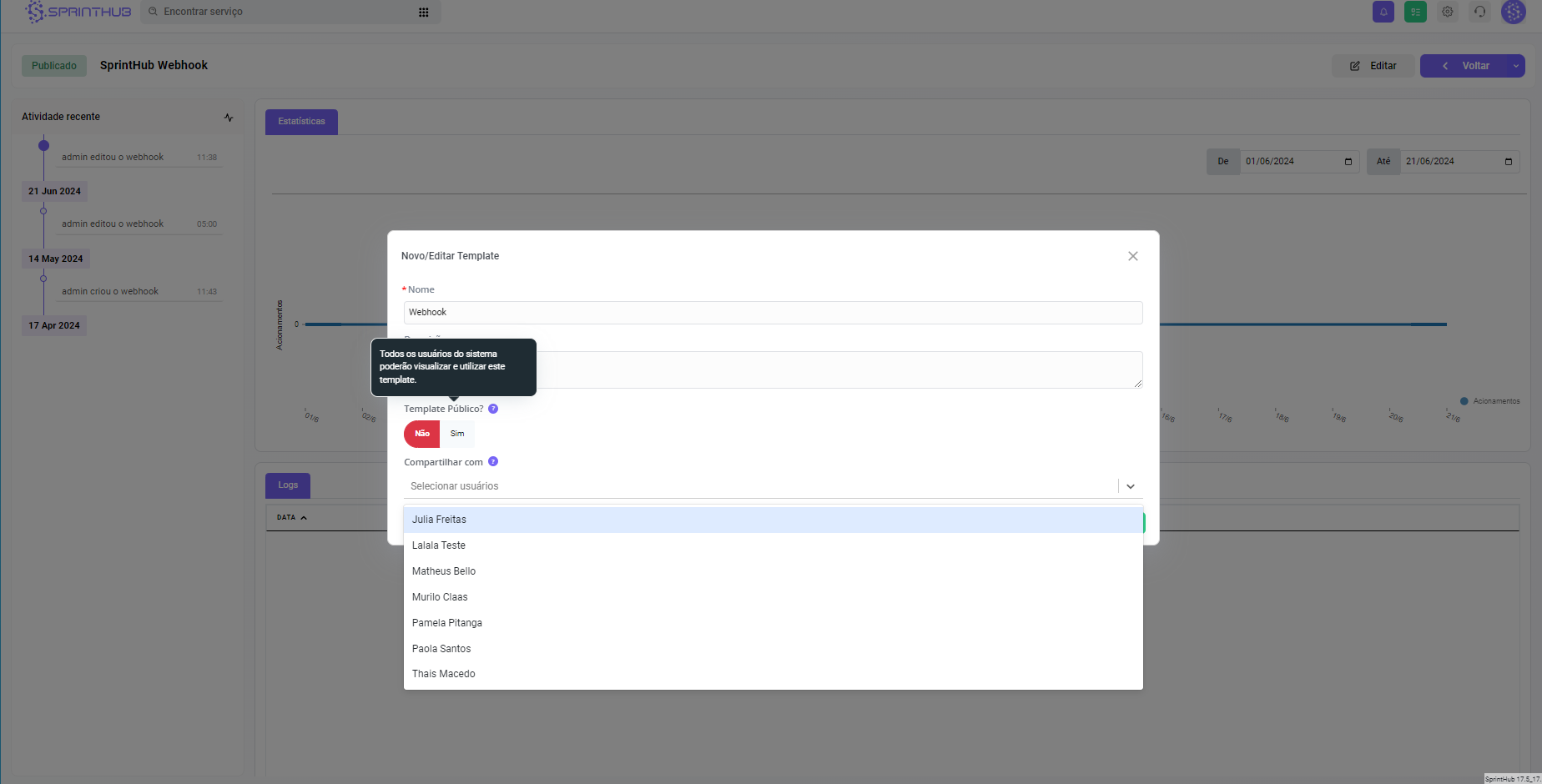
**Ele terá as opções de Nome, Descrição e se ele é público ou não.**

<figure><img src="/files/xkXZhKBleyqs8Odt1zl7" alt=""><figcaption></figcaption></figure>

**O que muda se o template for público ou não?**

Se sim, todo e qualquer usuário do seu ambiente Sprinthub pode acessar, com o não você precisar selecionar quem pode ver o template.

<figure><img src="/files/m01ot1JfjbK7tRJ0CIFk" alt=""><figcaption></figcaption></figure>

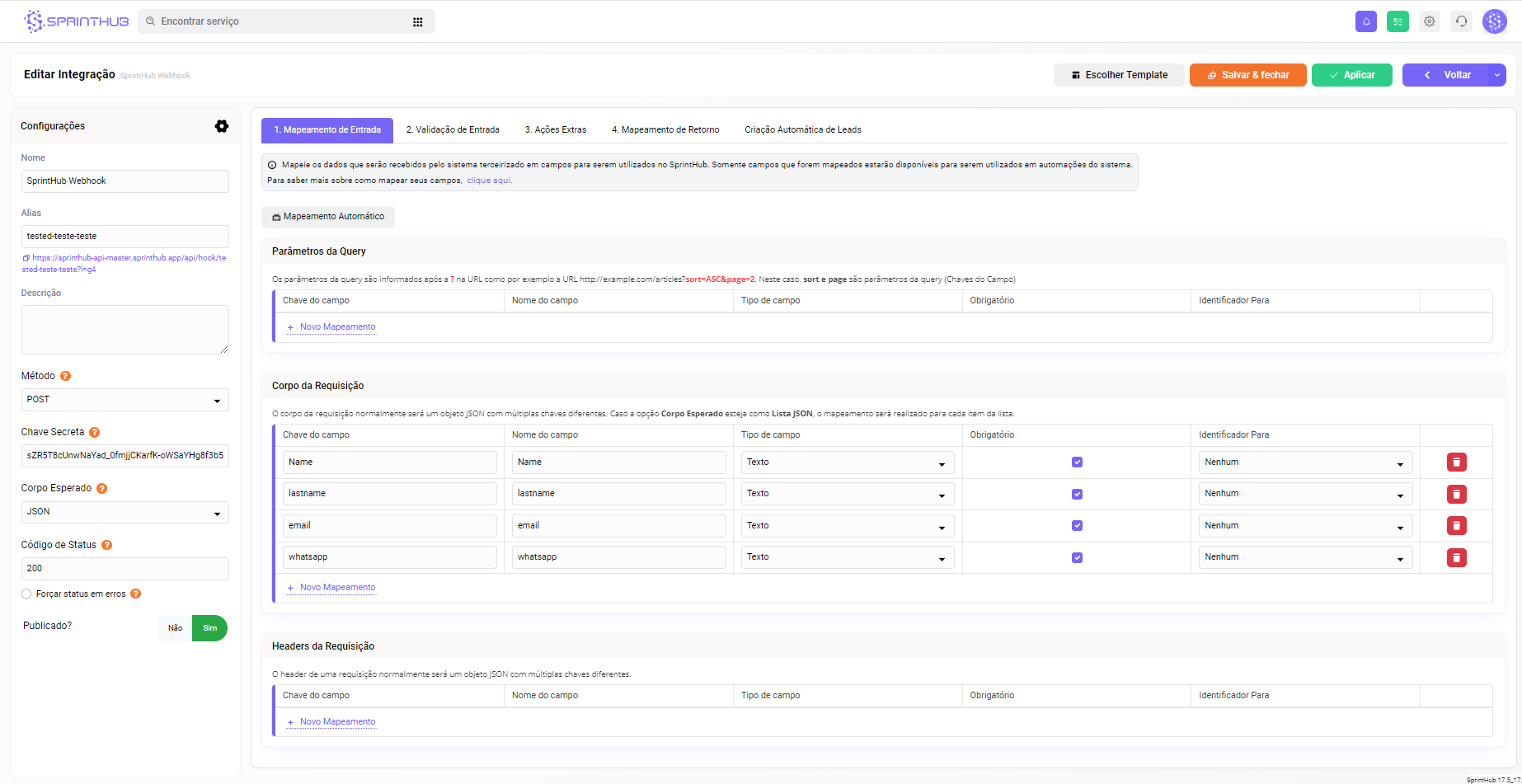
### Criando um webhook com o template
<figure><img src="/files/eQB2ANj0LuXzc2ze9TvA" alt=""><figcaption></figcaption></figure>

<figure><img src="/files/pRsBtHoXcPTkDneEuI3U" alt=""><figcaption></figcaption></figure>

<figure><img src="/files/tZ5gkYs6nyZM86djnRHI" alt=""><figcaption></figcaption></figure>


---

# Agent Instructions
This documentation is published with GitBook. GitBook is the documentation platform designed so that both humans and AI agents can read, navigate, and reason over technical content effectively. Learn more at gitbook.com.

## Querying This Documentation
If you need additional information that is not directly available in this page, you can query the documentation dynamically by asking a question.

Perform an HTTP GET request on the current page URL with the `ask` query parameter, and the optional `goal` query parameter:

```
GET https://docs.sprinthub.com/duvidas-comuns/template-de-automacoes/webhook-integrado-template.md?ask=<question>&goal=<endgoal>
```

`ask` is the immediate question: it should be specific, self-contained, and written in natural language.
`goal` is optional and describes the broader end goal you are ultimately trying to accomplish on behalf of the user. GitBook uses it to tailor the answer towards what is most useful for that goal.

The response will contain a direct answer to the question and relevant excerpts and sources from the documentation.

Use this mechanism when the answer is not explicitly present in the current page, you need clarification or additional context, or you want to retrieve related documentation sections.